The United Alaska Campaigner 40th year edition—March 2024 Alaska State Bank, Part 3, Exposing oligarchic lies about money creation and industrial technology *website edition
“Benjamin Franklin, America’s founding father taught the importance of creating money.”
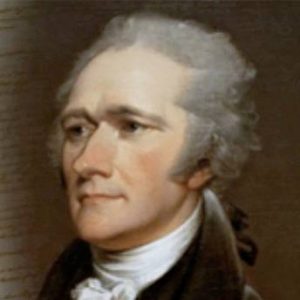
“Alexander Hamilton wrote the majority of the Federalist Papers and founded the American System of political economy through writing his Reports to Congress.”
The asset price bubble based on financial derivatives that currently dominates the United States economic system will someday abruptly end like all other asset price bubbles in American history.
The injustice of the financial bailout of these derivatives that began in the year 2008 cannot forever enjoy massive subsidies from the United States Treasury and Federal Reserve when the physical economy of manufacturing and infrastructure continue their long-term decline.
The question is whether our nation will be prepared with the credit guidance, taxation, federal spending, and industrial policies necessary for a healthy and prosperous future when the derivatives credit bubble, once again, destabilizes.
As the bubble comes to an end in future years, the long-term readers of the United Alaska Campaigner (UAC) will already have the preliminary knowledge for putting our national economic system back together again.
Of the four financial reform methods in United States history (presidential, congressional, state, and institutional) this author focuses on the state reform method through creating public state banks that access federal monetary and federal fiscal policy. My commitment to this method was the reason I was hired by the Alaska Legislature as the primary legislative assistant to write the still incomplete 2018 Alaska State Bank legislation.
This 40th year edition of the UAC contains an overview of some of the foundational concepts necessary for participating in a new financial architecture based on creating public state banks across our nation that help to build new infrastructure and restart manufacturing industries using modern industrial technology.
This edition of the UAC will first identify some of my personal history to reveal the origins of my thought process, and then review the lessons of macroeconomics previously introduced with a focus on the intentional lies about how bank and federal money is created.
Then, historical lies about the American System will be confronted, and next is an explanation of why loan origination using the Alaska State Bank and the Alaska Industrial Development and Export Authority (AIDEA) is superior to bonding. Next, one of the lies taught in our popular media about the future path of energy production will be corrected by presenting one of the physics concepts in industrial science that demonstrates why “Green Banks” will fail.
The causes of the failure of the Alaska Science & Technology Foundation will then be revealed and rectified through presenting industrial mission assignments for AIDEA. The Alaska economic development requirement for hiring the engineering services of Midrex Technologies, Inc. will then be discussed.
The goal is to develop an understanding of both anti-corruption credit guidance policies and mission assignments for technological advancement that can help in the future economic success of Alaska through creating the Alaska State Bank.
If there are to be honest discussions about reforming our financial system through creating a new system of public state banks, there must be honest discussions about the basic facts of how our financial system creates new money. Cutting through the intentional lies and myths taught by oligarchic interests must be the beginning of our design of public state banks that benefit all citizens.
These state banks will be given the great privilege of increasing the United States money supply while creating the legal ability to directly access federal and Federal Reserve monetary policy subsidies and savings—and with great privilege comes great responsibility. Credit guidance and anti-corruption structural requirements must be written into the founding legislation of a public state bank, and learning what is true and what is a lie about how money is created is the beginning of learning that responsibility.
Origins of my thought process
To better understand my advocacy for creating the Alaska State Bank and how a workable technological and anti-corruption credit guidance policy can be developed, some of my personal history can be revealed.
I was an associate of EIR News Service in the early 1980s and participated in economic conference series in multiple cities, including Washington, D.C., discussing international financial reform, and military industrial science. I spent 22 years of my life in various capacities with EIR while continuing my 33-year career as an active union ironworker traveling all over Alaska and several other states.
Being part of the organization that convinced President Ronald Reagan to announce the Strategic Defense Initiative “Star Wars” program gave me a basic knowledge of the theoretical foundations of industrial science, and working as a union ironworker gave me the practical knowledge of how to build new industries.
I continued to participate in economic conferences as I spent most of my life traveling and learning how to build infrastructure and industrial productive capacity. This current essay was written while hosting in the neighborhood of the Asian Development Bank in Manila, Philippines, and I am currently looking for a new financial sponsor to help with my projects.
Reviewing previous ideas
First of all, the three theories of banking (credit creation, credit intermediation, and fractional reserve) must be learned to know that banks create new money when they originate loans. Financial interests using institutes, foundations, and educational systems continue to teach the two false theories of credit intermediation and fractional reserve to misguide attempts at regulation, but the truth is found easily with a search of the Internet or reading parts 1 and 2 of this series.
Credit creation is where originated bank loans increase the money supply through double-entry bookkeeping where loans create deposits or make payments for purchases. Banks must meet the capital and reserve requirements for the total volume of loans, but when a new loan is originated, the money does not come from any other account inside or outside the bank, as stated by the false intermediation theory of banking. Funds traditionally intermediate investments, but banks create new money.
The fractional reserve theory was always false because reserve compliance takes place after loan origination. The difficult part of credit creation is the credit assessment in finding creditworthy borrowers and prudent investments, not searching for reserves to comply with reserve requirements.
The fundamental issue of credit creation is whether new money is created for productive investments, that historically have comparatively low financial returns, or speculative investments that have high risk, but generally much higher financial returns.
Between the years 1936 to 1982, there were regulatory restrictions against speculative investments in Federal Deposit Insurance Corporation (FDIC) insured banks. The attempt was to create rigorous legal distinctions between speculative investments and productive investments to prevent inflation and another 1929 style crash of financial systems.
The credit guidance policies for banks creating new money that were strongly in effect between 1936 to 1982 insured that society would use credit creation increases in the money supply for productive purposes that generally raise living standards and the quality of life for domestic populations.
Laws such as the Glass-Steagall Act of 1933, and the Commodity Exchange Act of 1936 provided the legal framework for the regulations that served as the foundation of a credit guidance policy that shaped the United States economy toward higher living standards for the average family.
As financial and oligarchic interests continued their pressure on educational and political systems to teach and promote a radical free market ideology, the financial cartel system began to see success in deregulating and corrupting banking systems.
Beginning in 1982, the lines started to become blurred between banks and funds through popularizing deregulation and the Garn-St Germain Depository Institutions Act, thus allowing the causes of the crash of 1929 to reenter the commercial banking system.
The federal credit guidance policies and infrastructure spending that had ushered in a new era in economic development and higher living standards in the post-World War II era had begun to disintegrate as the once illegal speculative derivatives began overwhelming funds and banks while hyper-inflating “shadow banking.”
Over a period of years, the credit guidance polices mandated by the Glass-Steagall and Commodity Exchange Acts and other important regulatory provisions were lost, and thus productive capacity investments declined into a post-industrial calamity that lowered living standards for most of the populations of dollar-based economies.
Corporations, financial interests, and investors benefited greatly from deregulation, but the average family suffered stagnant or lower living standards in North and South America.
In the year 2008, financial systems completely lost their ability to maintain debt service payments in the derivatives market that had manifested itself in real estate investments. That same year, institutional policy reforms at the United States Treasury and Federal Reserve began massively subsidizing derivatives that continues to this day.
Some of the top money managers should have gone to prison and some of the biggest banks should have been put through dissolution, but that is not what happened—instead previously illegal financial instruments were bailed out through receiving trillions of dollars in subsidies. The corruption that had been held in check by credit guidance polices became systemic within the public and private structures of finance.
Today, inflationary speculation continues to be bailed out and physical production continues to decline. Institutional reform continues to reward corruption and gambling, Congressional hyper-partisanship continues to gridlock federal economic policy and not create a National Infrastructure Bank, and the Presidency continues to fail at leading through the mission assignment great projects approach.
Now the only workable policy solution is for states to lead a financial reform as they had done early in United States history.
The overall intent of the public state banking movement is to reassert the credit guidance and credit creation policies that had ushered in a new era in economic development during the post-World War II era. Yet this time, public state banks will allow for a greater emphasis on the local decision-making process in directing the physical investments of federal and Federal Reserve monetary policy.
State governments, local banks, municipal governments, boroughs, credit unions, port authorities, Native corporations, educational institutions, and local entrepreneurship will have a greater input into investment decisions about the economic future of our state and nation through creating the Alaska State Bank.
Founding the Alaska State Bank will give the Alaska Legislature the opportunity to shift some fiscal responsibilities into monetary policy increases in the money supply and have the State of Alaska receive interest payments from that process.
The truth of federal spending
Before proceeding to understand how state governments can use monetary policy to invest in new infrastructure, new industries, and transformative technologies using public state banks, we must first address another one of the oligarchic lies that is now dominant in educational and political systems concerning money creation by the federal government.
The pernicious lie is that sovereign federal governments do not create money and instead use taxpayer money for spending.
This was the money creation issue when Benjamin Franklin testified to the British House of Commons in 1766. When asked about the reason for the loss of the American colonies’ respect for the British Parliament, Franklin responded with— “…. the prohibition of making paper money among themselves.”
One of the primary economic reasons for the founding of the United States as identified by Benjamin Franklin’s testimony was the creation of money. The public banking movement today reflects Benjamin Franklin’s efforts to assert sovereignty over financial systems.
The political fight for Congress “to coin money, regulate the value thereof” in Article I, Section 8, Clause 5 of the United States Constitution continues to this day. The absolute hatred of this clause by traditional oligarchy has led most people today to falsely believe that taxes fund sovereign federal governments.
Once the operational accounting structure is known of how Congress spends money into existence by instructing the Treasury to credit accounts through the Federal Reserve into the local bank accounts of individuals or corporations, it is then clear that no taxpayer money is needed for federal spending.
The purpose of federal taxation is to control inflation, impose penalties, create employment, and provide subsidies and savings to direct the economy—not to fund government. The United States Treasury and Federal Reserve sell securities through the private banking system to control interest rates and inflation, create employment, and provide subsidies and savings—not to fund government.
Federal debt is created and sold as a monetary policy choice based on total tax receipts versus federal spending. This federal debt is absolutely required because the subsidies and savings are used to stabilize an inherently unstable private economy that continues to create depressions many times throughout history.
Federal tax numbers in the form of computer digits are returned to the Treasury on computerized accounting spreadsheets through a reverse of a similar process as federal spending, but Congress as the sovereign issuer of the currency, as mandated by the Constitution, does not require the tax receipt computer digits, and therefore taxes are not necessary for federal spending.
State and municipal governments spend tax revenue, but Congress as the sovereign issuer of the currency spends and lends money into existence.
Creating reserve money is required for net clearing between banks, and all federal spending is an increase in reserve money and all federal tax receipts are a decrease in reserve money. Since the daily volume of reserve money is one of the factors for controlling interest rates, the United States Treasury and Federal Reserve coordinate the draining and replenishment of reserves through selling securities to the private and public sectors and use Special Depository Banks as temporary tax receipt holding facilities.
These absolutely true accounting facts about the creation of money are the ideas that are the most closely held secretes in the study of economics in our current political and educational systems. The operational fact of how all sovereign federal governments spend and lend money into existence infuriates the financial oligarchy to the point that most discussions of this process have been systematically eliminated over the years so that a myth based on a lie has become the dominant method of public discussion.
As the inner elite of economists know, credit money is created through double entry bookkeeping in banks; federal money is created through federal spending and lending; reserve money is created as federal spending passes through reserve banks, local banks purchase reserves from reserve banks, and reserve banks purchase or borrow securities; and foreign exchange money is created when foreign funds arrive in domestic banking systems. These are the accounting facts about the United States dollar system that corporate and financial systems lie about to maximize their profits and power.
The policy officials creating public state banks must know these basic facts about money creation so that when they found their banks, or the next financial crisis occurs, they have already designed their public banks to receive money quickly through federal monetary and federal fiscal policy increases in the money supply.
American versus British Systems of political economy
The next lie to consider is that the political framing of economics should be based on capitalism versus socialism. This lie is so pervasive that many well-informed researchers have trapped their minds into misunderstanding the history of the founding of the United States.
The truth is that the protege of Benjamin Franklin, Alexander Hamilton fundamentally challenged the educational and economic systems of the British East India Company when he wrote his Reports to Congress and became the first United States Treasury Secretary.
The most common lie about Alexander Hamilton is that he designed the United States financial system based on the British banking system, but a deeper understanding of his Reports to Congress reveals that the operational structure was similar, but the intent was absolutely revolutionary. Hamilton challenged the European oligarchy’s economic assumptions with an entirely new system that would create new money to fulfill the mandates of the new United States Constitution.
The fact is that Alexander Hamilton’s Reports to Congress represented a fundamental shift in economic policy direction for the entire nation state system of democratic republics. Our new nation was to be functionally superior to the old educational and economic systems of the British East India Company that was guilty of committing genocide against the populations under its control.
During most of the 1800s, the debate between these two fundamentally conflicting systems of political economy was based on framing the issue of economics as the battle between the American (School) System versus the British System.
Henry Charles Carey, who was President Abraham Lincoln’s primary economic advisor, advocated this true dichotomy that continued as the dominant method of explaining the two ends of the political economic spectrum until almost the turn of the next century.
Near the end of the 1800s, the British System began usurping that dichotomy in public discourse and introduced the false to history, capitalism versus socialism that was based on two systems that were both oligarchic in outcomes. The American System represented a fundamental challenge to oligarchy but would be lost in history.
Both capitalism and socialism are features of the British System because both have the end result of creating the social systems of oligarchy where a few people and institutions get rich while most populations live in poverty or a declining quality of life.
Today the British System infects most educational systems with their “competition for scarce resources” and General Equilibrium Theory that are obviously false. Industrial science teaches that the usable resource base is determined by the application of technology, and history teaches that civilizations and financial systems rise and collapse repeatedly and never sustain equilibrium.
Only the American System has proven time and time again in history to improve the lives of average citizens, even if financial oligarchies do their best to erase the American System from all history and economic textbooks.
Alexander Hamilton’s economic and credit creation financial ideas have reasserted themselves many times in United States history even with the never-ending attempts to exclude his ideas from public discourse by framing the economic debate as between capitalism versus socialism.
A true to history economic debate is the battle between the American System and British Systems of political economy, and the public state banking movement reflects the true character of this economic debate.
Credit creation or bonding
The next lie to confront is that bonding is the best method for state governments to fund economic development. Once the credit creation function is understood in the loan origination process then it becomes clear that bank loans increase the money supply and bonding is not an increase in the money supply.
States giving themselves the ability to increase the credit money supply through bank loans originated by public state banks, while being protected by the sovereign issuer of the currency, is a powerful advantage over the current method of bonding that gives private finance all of the interest payments from economic development projects.
The Alaska Industrial Development and Export Authority (AIDEA) has made excellent attempts to claw back some interest payments through originating leveraged loans using credit creation, but the loan volume is so low that it makes very little difference in the state budgetary process. AIDEA is an authority and not a true bank and, therefore, does not have the legal ability to directly access federal and Federal Reserve monetary policy subsidies—this is the primary reason for creating the Alaska State Bank.
Leveraging many different types of investments is one of the established oversight strengths of AIDEA that in partnership with the new Alaska State Bank will help in the credit creation oversight process of anti-corruption where front office advocacy and the back office rigorous examination of financial facts come together for prudent investments. Requiring loan partnerships for every major project is an important oversight anti-corruption requirement of the Alaska State Bank legislation.
Establishing the Alaska State Bank, that prioritizes the local decision-making process of credit creation instead of bonding, is a direct line of argument similar to what Benjamin Franklin used when explaining the economic reasons for creating the United States. Public state banks established by state governments will receive the interest payment benefits of credit creation in loan leveraging partnerships with the private banking system that will be providing oversight, check clearing, and risk assessment services.
The bonding process is best used to fulfill the capital requirements for originating new loans in cooperation with private markets and federal monetary policy. The cooperation between private interests and public interests is one of the hallmarks of the American System. If private interests act as speculative predators, they must be regulated and prosecuted—if they cooperate with what is good for the general public then they should be rewarded.
Today, the American System is reasserting itself in the public state banking movement, where credit creation for infrastructure, education, science, technology, health care, housing, agriculture, industrial tax revenue, prosperity for working families, and the health of our natural world take the priority over bonding or predatory speculative investments.
Principles of industrial science
Without spending too much time with all the arguments concerning the physics of industrial science that I have discussed many times on my websites and public testimony; it is best to first expose another lie taught by the British System, and then give one representative example of how industrial technology can be measured using physics.
The prevailing media and political lie about industrial science is that backward inefficient technologies have the ability to improve the health of both human populations and our natural world.
Television, radio, newspapers, Internet, educational systems, and political discussions are all consumed with propaganda that promote the backward “green” technologies of wind and solar power that ultimately protects the vested interests of a few very wealthy investors and institutions who are following a British System agenda.
Old dirty industries and power production technologies can never be qualitatively challenged with solar and wind energy production systems because their inefficiency does not allow for the physical ability to make current technologies obsolete. Efficient technologies that physically can make current technologies obsolete based on applying the physics of industrial science are left behind because public discourse and public budgets are overwhelmed by controlled opposition solutions that are promoted by vested interests and true believers in the green agenda.
One example of a physics performance metric that can identify the efficiency of technologies is known as energy flux density that measures the qualitative concentration of energy effected per cross sectional area of a process and can be expressed in economics as the qualitative rate of energy use per person or per unit area. Mankind first burned wood, then coal, then oil and gas, then uranium to power productive capacity. With each new transformation in productive capacity based on higher energy flux density, the usable resource base was redefined, overall productivity increased, and more humans could live with a higher quality of life.
The experimental and historical validation of the physical principle of energy flux density is the reason why credit guidance, grants, subsidies, and mission assignments for industrial technology must be directed toward investments that can quantify their energy flux density or help in establishing the platform for other physically efficient technologies or industries.
Measuring solar and wind energy production systems using energy flux density as a performance metric clearly identifies their inefficiency. These “Green Bank” backward technologies cannot physically create the industrial platform for future plasma processing industries and end up failing financially because of the inefficiency of the physical investment in comparison to existing competition.
Many examples of physical principles predetermining the future of productive capacity can be discussed but physics is rejected by those who are true believers in the Green Bank agenda because they want less humans to live on the planet earth and applying physics to industrial science allows for growing populations to enjoy a higher quality of life.
This is the reason performance metrics for technological progress have already been written into the Alaska State Bank legislation. Understanding these performance metrics allows for knowing why some of the efficiency solutions of the green movement do have good economic merit but the agenda of promoting less efficient technologies such as wind and solar energy production do not.
Wind and solar power production systems can produce energy but at a much higher long-term cost once all subsidies are considered in comparison to current oil, gas, and nuclear technologies. Long-term, heavy investment into backward technologies ends up causing the average family to have a lower living standard due to prices increasing and negative productivity.
Some British System green extremists advocate shutting down current fuel systems in favor of less efficient wind and solar power systems, but the loss of human life associated with destroying current systems is a genocidal burden too great for the posterity of humanity.
The better solution is to learn and apply the physics of industrial science that helps to build a modern fusion, hydrogen, and electric economy that physically has the ability to clean up the environment based on high energy flux density industrial plasma processing that allows more total humans to have a higher standard of living.
Causes of the Alaska Science & Technology Foundation failure
As I have stated many times in the past, technologies must be chosen for an economic development technological credit guidance policy not only for their physical efficiency but also for their ability to qualitatively transform multiple industries or create the platform for future processes or industries.
To develop a successful technological credit guidance policy, industrial mission assignments must be identified, physics must guide productive investments, construction of new infrastructure must consume industrial production, and entrepreneurship must have access to complementary industries and infrastructure; modern machine tools, and investment capital money.
These basic lessons in development economics were the cause of the failure of the Alaska Science & Technology Foundation and the Alaska Science and Engineering Advisory Commission—even if they had a few good achievements. The legislation that created these institutions was flawed from the beginning because it failed to incorporate these lessons. The extreme free market ideology that founded and managed these institutions forced entrepreneurship to be naked and alone with no supporting infrastructure and no in- depth logistical supply chain capabilities from mutually directed complementary industries.
Today we will create a fresh start through establishing a public state bank that has physics included in the original founding legislation. Mission assignments will promote mutually beneficial industries, and entrepreneurship will finally have the direction, machine tools, and financial credit necessary for success. Repeating the failure of the Alaska Science & Technology Foundation will be avoided by clearly identifying long- term industrial goals.
Alaska’s industrial mission
As I identified in the first issue of this newsletter 40 years ago; high technology capital goods production is the next step for a resource-based economy like Alaska.
The key is to have the engineering services and the overall direction necessary to develop a multi-decade steppingstone platform for industrial development. One industrial platform creates the ability to achieve the next industrial platform. The solution is to have long-term industrial mission assignments that incorporate multiple successive platforms.
This is why a resource-based economy like Alaska requires the mission of miniaturizing and launching into space, hydrogen plasma processing continuous casting robotic capital goods production for strategic, ceramic, and construction materials—heavy 3D printing.
A parallel plasma program for clean fuels production must also be included. These long- term mission assignments will give Alaska the ability to focus on multiple successive platforms over a period of many decades while at the same time provide long-term goals for a technological credit guidance policy at the Alaska Industrial Development and Export Authority and the Alaska State Bank in compliance with the United States National Defense Industrial Strategy.
Alaska has already established a first-generation platform through the primary reduction of ores and the extraction of oil and gas in many locations in Alaska. Today Alaska must take the next step and learn to produce finished and simi-finished products.
The physics of industrial science must guide our long-term goals in these multiple successive industrial platforms and not the propaganda of financial interests who are attempting to protect their vested interests.
Midrex Technologies
Let us begin by hiring Midrex Technologies in Charlotte, North Carolina to help Alaska build an over two-million ton per year iron production facility at Port MacKenzie that will establish the in-depth logistical capabilities necessary for other industries to take their next steps into moving to their next industrial platforms.
The long-term gas contracts for the new production facilities at Port MacKenzie will be one of the keys for renewing and stabilizing gas production in the Cook Inlet while establishing the industrial platform for future hydrogen production and sales.
Reducing iron and producing construction rebar for export and local use such as building the Susitna Hydroelectric Project will establish the foundations for our long- term mission of miniaturizing industrial technologies for space exploration. Both new and recycled iron and steel will be produced at Port MacKenzie while many Native communities can create employment through recycling what is left behind by consumers, industries, and the military.
Preparing for the future
Learning how money is created in our current financial system and learning what is a modern technology using physics as a performance metric lays the foundation for a new financial architecture.
Continuing the inflationary bailout of previously illegal financial instruments through increases in the money supply while consuming public and private money for backward Green Bank technologies is not a healthy path forward for our state and nation.
Founding the Alaska State Bank is an American System solution that will create new money based on historically proven anti-corruption credit guidance for building new manufacturing and new infrastructure using truly modern technologies.
Establishing public state banks across our nation that create credit and access federal and Federal Reserve increases in the money supply is one of the keys to a healthy path forward that rewards the standard of living for most families and not just a few wealthy money managers servicing a financial oligarchy.
Learning what is true and what is intentionally a lie about how accounting systems function to create new money and learning that physics must be included in the study of economics is the beginning of developing a brighter future for Alaska and our nation.
The inevitable collapse of the financial derivatives bubble will be our wake-up call for understanding what must be done to prepare for a new era in economic development that leads to prosperity for humanity and health for our natural world.
Charles E. Duncan
PO Box 212706 Anchorage, Alaska 99521
asced751@yahoo.com
Alaska State Bank Advocate Facebook